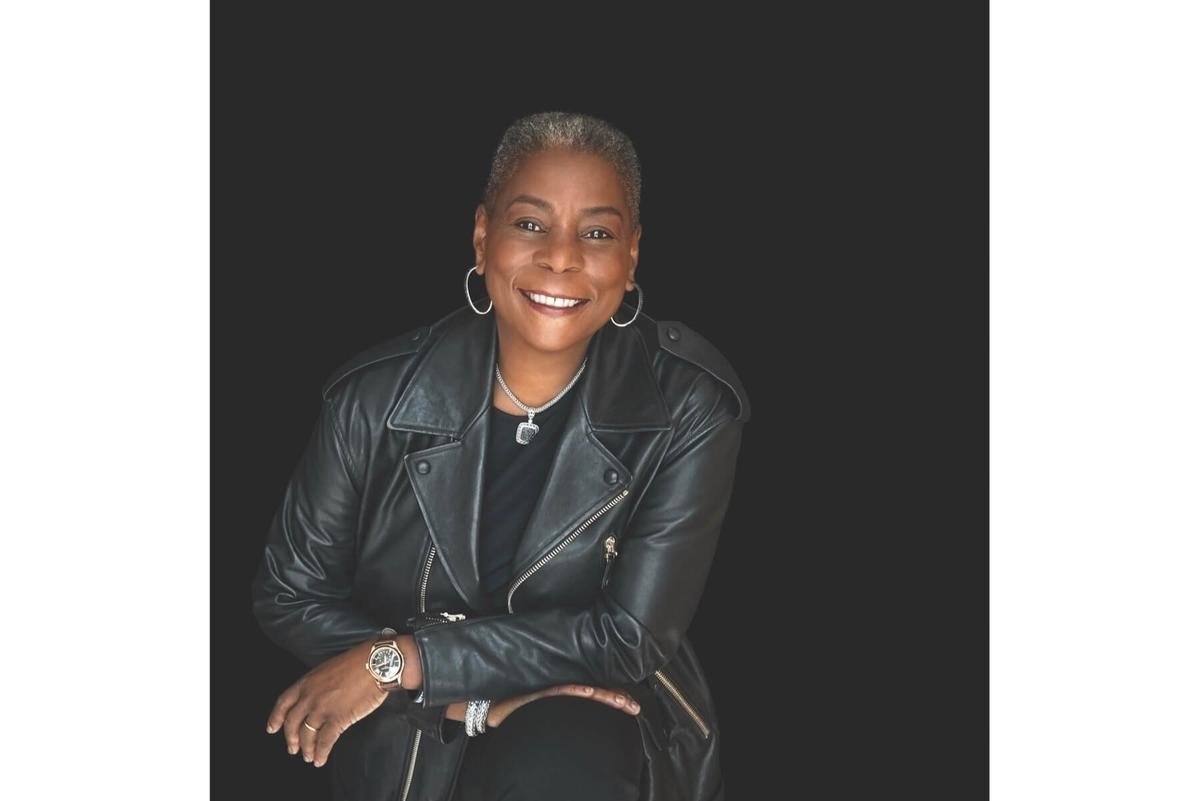
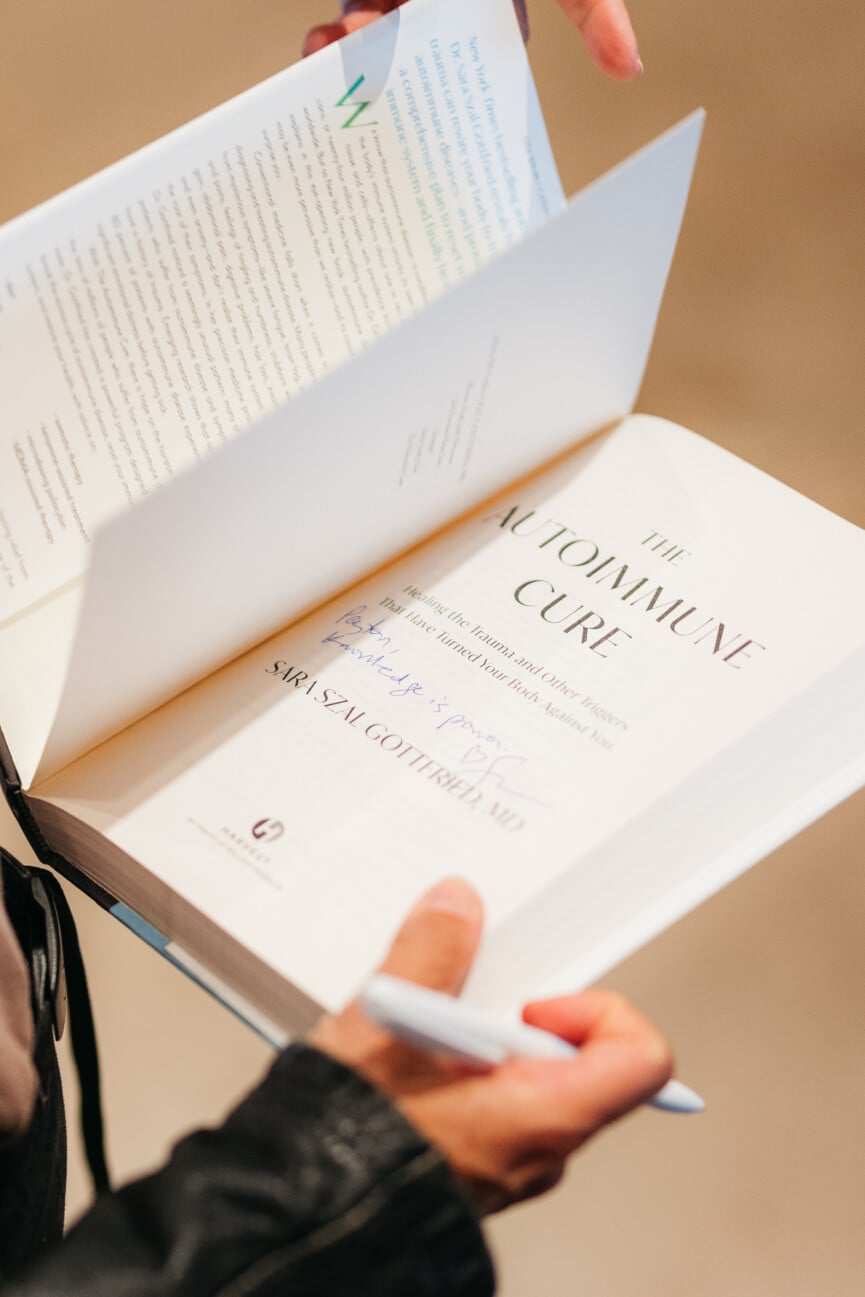
Fifteen of us floated in the warm waters of WorldSprings, a mineral hot springs spa located in Dallas, Texas. We were there for a calming sound bath, yet our attention was drawn to Dr. Sara Gottfried, even in her casual bathing suit and sunglasses. Her presence exuded the authority of a four-time New York Times bestselling author. A Harvard and MIT graduate, Dr. Gottfried serves as the Wellness Advisor for WorldSprings, leading the sound bath and guiding us through an anti-inflammatory circuit featuring saunas, cold plunges, and mineral baths. She was also on hand to sign copies of her latest book, “The Autoimmune Disease Cure: Healing the Trauma and Other Triggers That Have Turned Your Body Against You.” Clearly, many of us were there for her insights.
Featured image by Riley Blanks Reed.

Investigating the Connection Between Autoimmune Disease and Trauma
Once the sound bath concluded, excitement filled the air. “Your work transformed my life” echoed among attendees. Dr. Gottfried’s writings span topics from hormonal detoxification to anti-aging, all emphasizing the importance of taking charge of one’s health, especially for women. “Don’t surrender your power to your doctor or nurse practitioner,” she advises. “No one knows your body better than you.”
“Don’t surrender your power to your doctor or nurse practitioner. No one knows your body better than you.” – Dr. Sara Gottfried
Dr. Gottfried’s new book highlights her research into autoimmune disorders, which have risen sharply in recent times, particularly among women. She proposes an unexpected cause.
“I observed a significant rise in autoimmunity during the pandemic, and it appeared that trauma was a primary factor,” Dr. Gottfried explains. “I pay close attention to what my patients express, and a common theme emerged: increased trauma correlating with heightened autoimmunity.”
After enjoying the saunas and globally-inspired soaks, I had the opportunity to discuss her findings. Dr. Gottfried shared insights on adverse childhood experiences (ACEs), psychedelic therapy, and a crucial supplement for many women.
Dr. Sara Gottfried is a four-time bestselling author specializing in integrative health. Educated at Harvard and MIT, she is a physician, speaker, yoga instructor, and a Clinical Assistant Professor at Thomas Jefferson University, where she leads the Department of Integrative Medicine and Nutritional Sciences.
What led you to explore trauma as a trigger for autoimmune diseases?
The three criteria for autoimmune disease development include genetic predisposition, leaky gut, and a trigger. Triggers can range from hormonal fluctuations, like postpartum changes or menopause, to infections or traumatic events. Loneliness and isolation also play a role. During the pandemic, I noticed a notable increase in autoimmunity within my practice, indicating trauma as a potential root cause.
Is there a specific type of trauma that commonly triggers autoimmune disease?
Research highlights adverse childhood experiences (ACEs), which encompass abuse, neglect, and hardships faced during childhood. You can assess your ACE score here.
Why does autoimmune disease disproportionately impact women?
Women face about 10% more trauma than men, according to ACE studies . Additionally, significant hormonal shifts occur during pregnancy, postpartum, and menopause, which can affect immune responses. Social constructs also play a role, as women often bear greater caregiver responsibilities while facing wage disparities. These factors collectively heighten the risk of autoimmune disease, with women comprising four out of five diagnosed cases.
Your conversation with Dr. Mark Hyman on psychedelic therapies was fascinating. How do they compare to traditional talk therapy for trauma treatment?
Psychedelic-assisted therapy tends to be more effective for treating post-traumatic stress disorder than traditional talk therapy. While talk therapy resolves PTSD in about 30% of cases, MDMA-assisted therapy shows an efficacy rate of 67% to 71%. This suggests it’s significantly more effective. Early studies indicate psychedelic therapy might also help with conditions like treatment-resistant depression and eating disorders.
For someone unfamiliar with psychedelic therapies, what would you say? How have they influenced your healing journey?
We’re in the early stages of understanding the benefits of psychedelic therapies, even though many have been used for centuries. It’s crucial to recognize that psychedelics are generally safer than alcohol. Alternatives like holotropic breathwork, which I discuss in “The Autoimmune Cure,” can also promote healing. In my experience, psychedelic-assisted treatment accelerates trauma healing.
Can you elaborate on the Pine System and its relation to trauma?
Trauma can become trapped in the body, particularly in the psycho-immune-neuro-endocrine (PINE) system. The PINE system describes how we interact with our environment. This concept pertains to the communication between the mind and its various functions, the immune system, the nervous system, and the endocrine system, all of which influence physical, mental, and spiritual well-being. Think of the PINE as your stress response system; its sensitivity varies from person to person.
What wearables do you recommend for tracking heart rate variability?
I’ve found the Oura Ring and the Eight Sleep system, which fits over your mattress, particularly helpful for monitoring heart rate variability and improving sleep.
Is there a specific supplement you’d suggest for women?
While I avoid blanket supplement recommendations, many women lack magnesium, especially if they experience chronic tension. About 75% to 80% of women are insufficient. I typically recommend starting at 150 to 300 mg in the evening.
Your latest book is empowering for those seeking control over their health. What key takeaways do you hope to impart?
Don’t relinquish your power to your healthcare provider. You are the expert on your body. Take charge by testing for autoimmunity, as about 30% of Americans may have it.