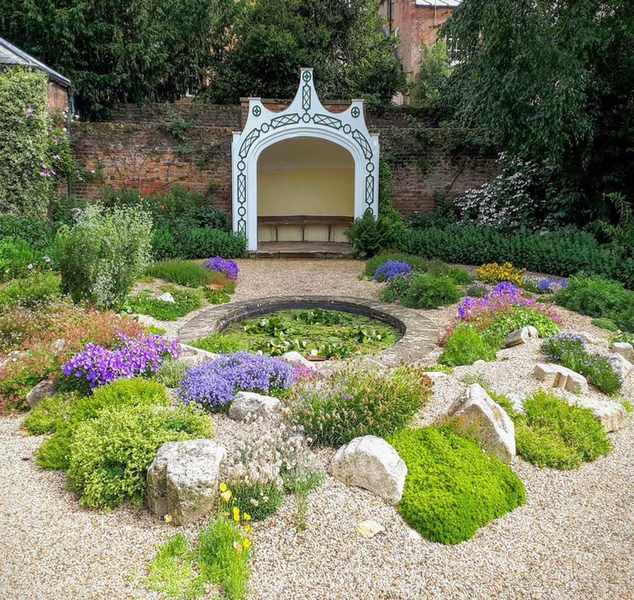
Building a rockery, also known as a rock garden, adds dimension and interest to your yard while accommodating dry or Mediterranean-style plants. It's a versatile feature that works well in both flat and sloped areas.
While European rockeries often highlight Alpine plants, feel free to mix in a variety of species, from drought-resistant succulents to vibrant cacti. The key is to select plants and stones that match your local climate and terrain.
You can construct a rockery on your own, especially if your yard has a natural slope. If not, you can create a mound using additional soil and rocks. Here's a straightforward guide to help you build your rockery.
Steps to Build a Rockery
To start your rockery project, gather these essentials:
- Unused building rubble, like broken bricks.
- Landscape fabric to cover the rubble.
- Topsoil.
- Rocks in various sizes, from gravel to larger stones, ensuring a natural appearance by choosing local materials.
- Compost.
- Plants suited for rockeries.
1. Select the Right Location
Your rockery can fit into any part of your yard, but it's important to assess conditions like shade, sunlight, and drainage. Ideally, choose a spot that suits the types of plants you wish to grow. Alpine plants thrive in bright light, while desert varieties prefer excellent drainage.
Take note of the surrounding area to ensure your rockery blends seamlessly into the landscape, enhancing its natural look over time.
2. Design Your Rock Garden
Once you've selected a site, sketch out the dimensions and shape of your rockery. Aim for an organic, irregular form for a natural feel, although formal designs inspired by Japanese gardens are also an option.
A rockery can be a low-maintenance solution for a front yard, providing visual interest without much upkeep. Create a seamless look by incorporating local stone and plants that are compatible with your region's climate.
As you design, keep in mind where your plants will go to allow for adequate planting pockets.
3. Prepare the Area
Begin by clearing the site of weeds. Next, lay down the first layer of rubble, ensuring to leave small gaps between the rocks for drainage, as excessive compacting can lead to poor water flow.
Once satisfied with the basic structure, cover it with landscape fabric to deter weeds, securing the edges with small stones before adding your first layer of rocks.
4. Position the Rocks
Start with the largest rocks to establish a natural slope. Randomly arrange them to avoid a patterned look. Then, fill in with smaller stones to stabilize the larger rocks while leaving openings for planting.
Ensure landscaping fabric edges are concealed by rocks, gravel, or a retaining wall.
5. Add Topsoil
After placing the rocks, add a 4-5 inch layer of topsoil to form planting pockets. You may need to deepen the soil in certain areas to stabilize larger rocks.
6. Plan Your Planting
With most rocks and planting pockets established, position your plants in pots and step back to evaluate your layout for height and visual appeal. When satisfied, loosen the pockets, partially fill them with compost, and consider adding horticultural grit for plants that prefer well-draining conditions.
Firm the plants into the compost, fill around them, water thoroughly, and cover any exposed soil with gravel or small rocks.
Best Time to Build a Rockery
The ideal time to construct your rockery is January or February, when the ground is wet but not frozen. However, you can build it any time of year as long as the soil is workable.
Do You Need Soil for a Rockery?
Yes, soil is essential for a rockery. The type and amount depend on the plant preferences. Traditional rockery plants thrive in well-draining soil, so a mixture of compost, grit, and sand will create optimal conditions. Since you'll be making individual planting pockets, you can customize the soil mix for each plant's needs.